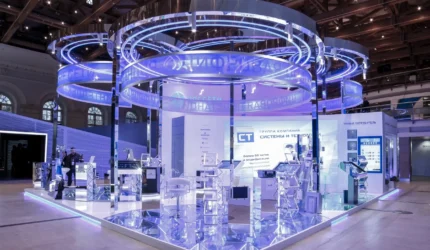

Are trade fairs still effective in the digital marketing era?
With the rise of sponsored campaigns and social media, many companies are asking a fair question:
does it still make sense to attend trade fairs?
The most realistic answer is:
yes — but not every fair, and not in just any way.
Trade fairs vs. digital marketing
Digital marketing delivers fast exposure and large numbers.
Trade fairs build trust, enable direct interaction, and support higher-value buying decisions.
In short:
digital marketing starts the relationship,
trade fairs help close it.
When does a trade fair become a real investment?
A trade fair truly works when:
-
your product or service is high-value and requires careful consideration;
-
your market is B2B, real estate, or based on specialized solutions;
-
clients need to see you, hear you, and compare options face-to-face.
If you sell fast, low-cost products, a trade fair is probably not the right channel.
The most common mistake companies make
Participating “just to be present”:
-
without preparation,
-
without a clear offer,
-
without a follow-up plan.
Then concluding:
“Trade fairs don’t work.”
How do you turn a trade fair into real results?
Very practically:
-
promote your presence before the event;
-
have a trained team, not just people handing out brochures;
-
collect data in a structured way, not randomly;
-
follow up within 48 hours after the event.
A trade fair is not just two days —
it’s a complete process.
Trade fairs or digital marketing: who wins?
They win together.
Digital marketing filters the audience,
trade fairs speed up trust and decision-making,
follow-up turns interest into actual business.
Trade fairs are still effective —
but only for companies that know why they’re attending and what comes next.
Those who see them as mere visibility and image-building
shouldn’t be surprised if they feel like a loss.